
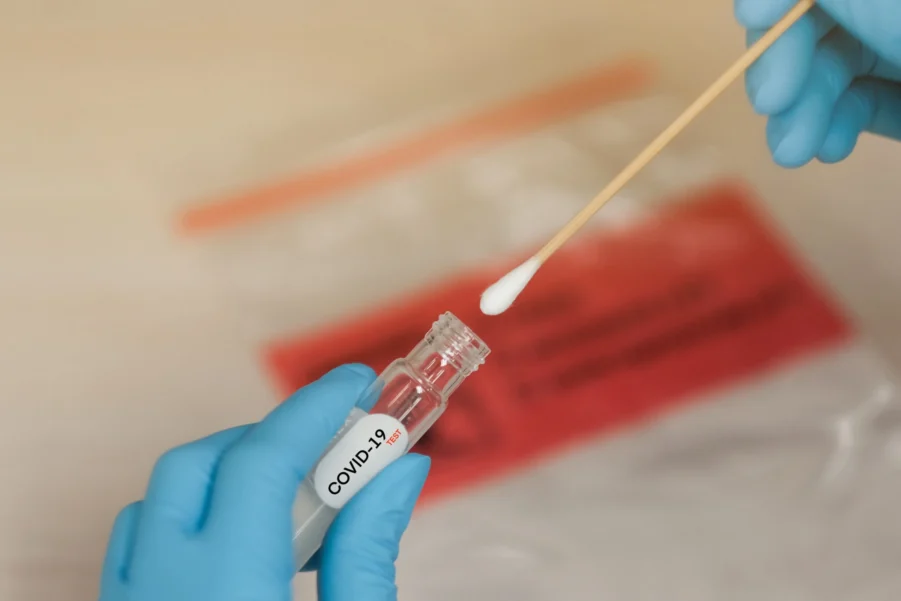
According to the ECDC (European Centre for Disease Prevention and Control), the method for diagnosing active infection with the SARS-CoV-2 strain of coronavirus is the molecular detection of nucleic acid (viral particles) from a nasopharyngeal sample, whereas serological testing (blood test) has not been recognised for this purpose.
The appropriate sample is a nasopharyngeal or oropharyngeal swab, which must be taken with a special flexible swab and with correct technique, so that a sample rich in cells is obtained. Virus tests with false negative results have often been reported; this comes down to a poor sample due to bad technique or the use of unsuitable equipment. It is also worth noting that the phase of the infection matters: if the virus is in its early stages or on the decline, the viral load may be quite low and give a false negative or an equivocal (borderline) result. In that case the laboratory doctor should ask for a repeat sample, so that the correct diagnosis can be made and the appropriate measures taken.