
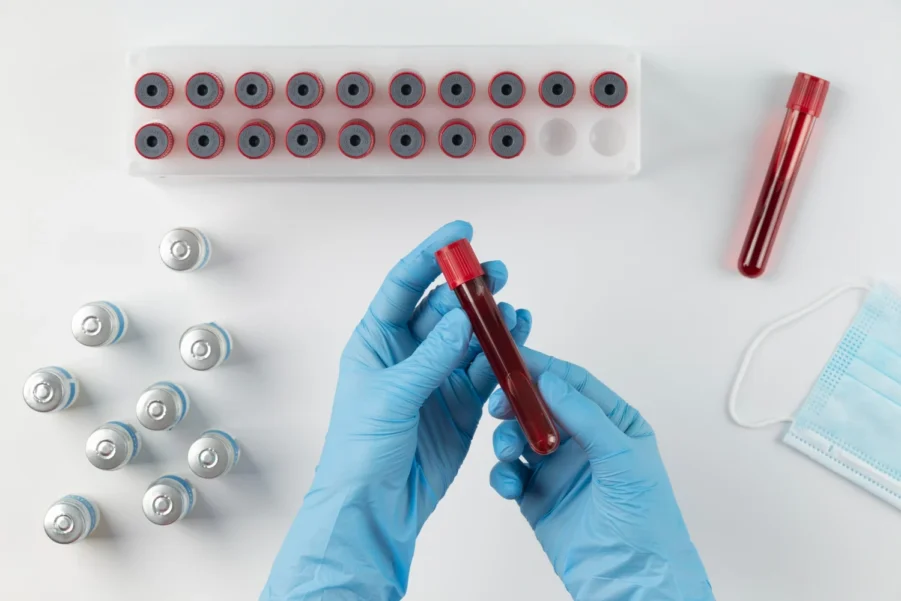
Blood Tests
The certified MIKROLAB laboratory performs the full range of blood tests.
By check up we mean the wealth of information about how our body is functioning that we can obtain from the classic blood tests.
The basic tests requested are the complete blood count, the biochemistry panel, the hormone panel and the urinalysis.
The complete blood count measures the red blood cells, the haematocrit and the haemoglobin; depending on their levels, we can tell whether anaemia is present. It also gives the white blood cell count: an increase or decrease in white cells suggests an infection, and the differential (the percentages of neutrophils, lymphocytes, monocytes and eosinophils) gives a first indication of its type. Neutrophilia usually points to a bacterial infection and lymphocytosis to a viral one; the diagnosis, of course, is made by detailed virological or microbiological testing. The urinalysis and urine culture should always be taken into account, as urinary tract infection is the most common infection of the human body.
What do blood tests include?
A basic biochemistry panel includes the liver enzymes SGOT, SGPT and ALP, bilirubin and γ-GT (a key marker of cholestasis), as well as urea and creatinine, the main markers of kidney function. The lipid panel includes total cholesterol, LDL, HDL and triglycerides, which are markers of coronary heart disease and should be checked at regular intervals.
No complete blood work-up should be missing CRP and ESR, the inflammation markers: these are the first tests a clinician requests to establish whether an inflammatory condition is present. Specialised investigation then follows to identify the cause.
The blood tests recommended every year should also check thyroid function. The main hormones tested are TSH, T3 and FT4. TSH is the regulator of the thyroid gland; if it is found high or low, a full work-up with T3, T4 and the antibodies anti-TPO and anti-TG is needed.
How often should blood tests be done?
Blood testing is recommended once a year from the age of 2. It is a preventive measure against every disease and leads to the early diagnosis of conditions and the prompt start of the appropriate treatment.
Our laboratories follow the guidelines of the World Health Organization for diagnostic methods, sample collection and transport and, above all, the reference ranges of every test.
Check Ups
-
Basic Check Up: €25
Complete blood count, urinalysis, ESR, glucose, urea, creatinine, SGOT, SGPT, total cholesterol, triglycerides
-
Anaemia Check Up: €34
Complete blood count, iron, ferritin, vitamin B12, folic acid
-
Full Check Up: €52
Complete blood count, urinalysis, ESR, glucose, urea, creatinine, SGOT, SGPT, total cholesterol, triglycerides, iron, LDL, HDL, γ-GT, CRP, amylase, TSH, potassium, sodium, uric acid
Anaemia: Why the Check Up Matters for Your Health
Anaemia is a condition characterised by low levels of haemoglobin in the blood, which reduces the blood’s ability to carry oxygen to the tissues and organs of the body. The result is symptoms such as fatigue, weakness, shortness of breath, dizziness and headaches. Anaemia can have many causes, such as insufficient intake of iron or vitamins, chronic diseases or even bleeding. Because its symptoms can be mild and develop slowly, they often go unnoticed and the condition is not diagnosed at an early stage. This is why the Anaemia Check Up is important for detecting and treating the condition in time.
What does the Anaemia Check Up at Mikrolab include?
The Anaemia Check Up at Mikrolab includes a series of tests that assess the levels of the blood components involved in blood cell production and oxygen transport. The tests include:
- Complete Blood Count (CBC): this basic test measures the levels of red blood cells, haemoglobin and haematocrit. Reduced values may indicate the presence of anaemia.
- Iron (Fe): iron is an essential element for the synthesis of haemoglobin. Low iron values may be a sign of iron-deficiency anaemia.
- Ferritin: ferritin is a protein that stores iron in the body. Measuring ferritin helps detect iron deficiency or the body’s inability to use its iron.
- Vitamin B12 and Folic Acid: deficiencies of these vitamins can lead to megaloblastic anaemia, which differs from iron-deficiency anaemia and requires a different treatment approach.
- Red Cell Indices (MCV, MCHC): these values describe the size of the red blood cells and their haemoglobin concentration. Abnormal values help determine the type of anaemia.
Once these tests are complete, the doctors at Mikrolab can identify the cause of the anaemia, if present, and recommend the appropriate treatment, which may include dietary changes, iron or vitamin supplements or, in more serious cases, medication.
Who should have the Anaemia Check Up?
The Anaemia Check Up is particularly important for people who have symptoms of anaemia or belong to high-risk groups, such as:
- Women of reproductive age: because of menstruation, women are more prone to iron deficiency and to anaemia in general.
- Pregnant women: during pregnancy, iron and vitamin requirements rise significantly, and anaemia can develop if these needs are not met.
- Children and adolescents: iron requirements are higher during growth, and anaemia can lead to delayed development and other complications.
- People with chronic diseases: people with chronic conditions such as kidney disease, heart disease or inflammatory bowel disease are more prone to anaemia because of their reduced ability to absorb nutrients.
- People with a poor diet: people who follow strict diets or have a limited diet without adequate iron or vitamin intake are at risk of developing anaemia.
People with symptoms such as constant tiredness, weakness, dizziness, shortness of breath or headaches should also be tested for anaemia.
Preparing for the Anaemia Test
Preparing for the Anaemia Check Up at Mikrolab is usually simple, but there are a few basic instructions to follow:
- Fasting: for the tests included in the Anaemia Check Up it is usually advisable to fast for at least 8 hours beforehand, as some results (such as iron levels) can be affected by food.
- Medication: if you take iron or vitamin supplements, inform your doctor and follow their instructions on whether to stop them before the test.
- Medical history: it is important to tell the doctor about any chronic conditions or symptoms that may affect the test results.
The Anaemia Check Up is a valuable tool for the prevention and early diagnosis of anaemia, a condition that can affect your daily life and quality of life. By addressing it early, you can protect your health and well-being in the long term.
Prices & Check Ups
-
Basic Check Up
Complete blood count, Urinalysis, ESR, Glucose, Urea, Creatinine, SGOT, SGPT, Total cholesterol, Triglycerides
€25
Book an appointment -
Full Check Up
Complete blood count, Urinalysis, ESR, Glucose, Urea, Creatinine, SGOT, SGPT, Total cholesterol, Triglycerides, Iron, LDL, HDL, γ-GT, CRP, Amylase, TSH, Potassium, Sodium, Uric acid
€52
Book an appointment -
Anaemia Check Up
Complete blood count, Iron, Ferritin, Vitamin B12, Folic acid
€34
Book an appointment





