
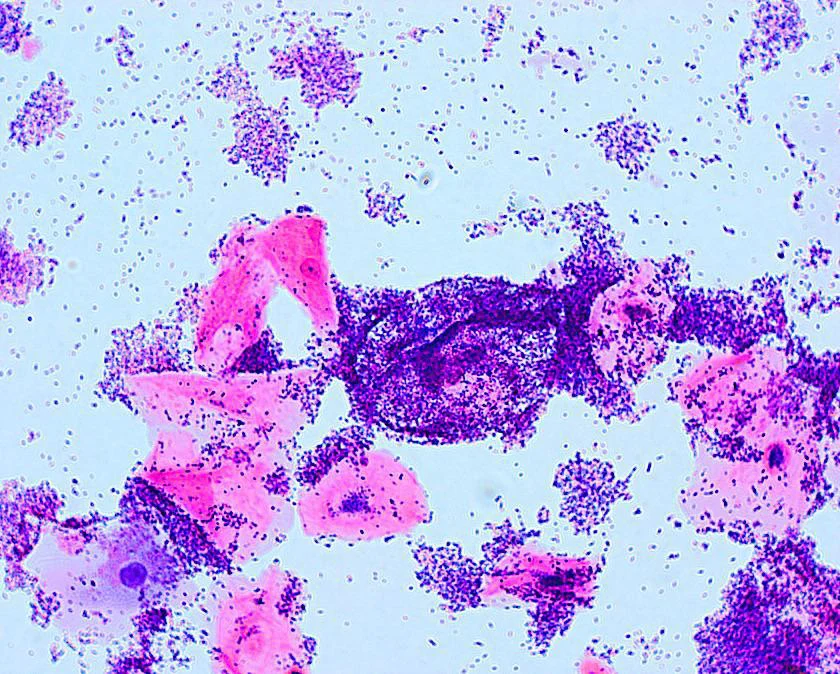
The vaginal fluid culture, together with direct microscopy of a wet mount, gives us a wealth of information about the normal flora of the vagina and about the presence of pathogenic microorganisms. The culture is divided into several categories, starting with the simple aerobic and anaerobic culture, in which we look for Candida sp. This is the main fungus that causes vaginitis, with symptoms of intense burning and itching and a whitish discharge that looks like “curdled milk”; treatment requires antifungal medication. Candida sp. is often difficult to treat. If there is indeed resistance, an antifungal susceptibility test is performed to identify the right treatment.
Another key vaginal pathogen is group B beta-haemolytic streptococcus (Streptococcus agalactiae). This pathogen causes unpleasant symptoms of vaginitis and must be screened for in pregnancy between the 35th and 37th week, as it is a cause of neonatal morbidity and mortality. Its treatment is simple, as it is sensitive to penicillin.
Gardnerella vaginalis, also known as Haemophilus vaginalis, is a pleomorphic aerobic and anaerobic bacterium that causes vaginitis with a foul-smelling discharge. It is quite common and is easily treated with specific medication.
Another vaginal pathogen is the parasite Trichomonas. This pathogen is sexually transmitted, causes vaginitis with a burning sensation and can often be found in the urinalysis as well.
Besides the pathogenic microorganisms, the vaginal fluid culture also grows the normal flora of the vagina, the “good bacteria”, the lactobacilli that protect the vaginal environment.
Gram-negative bacteria such as E. coli and Klebsiella sp., when found in light growth without pus cells and with good normal flora, are not considered significant. When there are many pus cells and reduced flora, they should be taken into account.
Vaginal and cervical samples must be taken by specialised staff, to ensure the validity of the test.
Pathogens of the cervix
The pathogens mentioned above concern the vagina; there are, however, also microorganisms that colonise the cervix. These are Ureaplasma urealyticum, Mycoplasma hominis and Chlamydia. These pathogens cause cervicitis when growth is > 1,000 cfu/ml and must be screened for in pregnancy, as they are implicated in miscarriage. Growth of the order of 1,000 or 10,000 cfu/ml points to colonisation and usually does not require treatment; all of this, of course, must be assessed together with the clinical picture and examination by the treating gynaecologist.