
Urinary tract infection is the most common infection of the human body. The usual uropathogens are E. coli, Enterococcus, Klebsiella and Proteus mirabilis as community-acquired pathogens, and Pseudomonas aeruginosa mainly in hospitalised patients, particularly those with a catheter. The female anatomy (exposed urethra) predisposes to infection, as does sexual intercourse.
The infection has an ascending course, starting as urethritis and cystitis and progressing to pyelonephritis (kidney infection).
The symptoms are urethral pain, painful urination, pain low in the abdomen (cystitis) and fever, which indicates that the kidneys are affected.
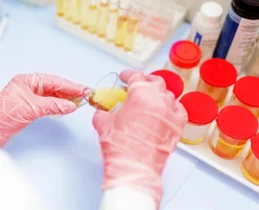
The diagnosis is made with a urine culture and also a urinalysis, which gives us information about the formed elements. The right sample is the first morning urine, collected after cleaning the area with plain soap, not antiseptic, and letting the first part of the stream pass. It must be brought to the laboratory as soon as possible.
The appropriate antibiotic treatment is given on the basis of the antibiogram and must be followed correctly. Not keeping to the doses, or taking the antibiotic for too short or too long a period, leads to recurrent infections, to multidrug-resistant strains and to colonisation of the urethra.